Wood carving is one of the oldest and most respected forms of craftsmanship in the world. For centuries, skilled artisans have transformed ordinary pieces of wood into beautiful works of art using traditional tools, patience, and creativity. From decorative wall panels to intricately carved furniture, handmade wooden carvings continue to hold an important place in modern interior design and traditional craftsmanship.
Today, handmade wooden carving techniques are used to create furniture, home décor items, doors, frames, sculptures, and temple decorations. Every carved piece reflects the dedication, skill, and artistic vision of the craftsman.
In this complete guide, we will explore the top handmade wooden carving techniques used by skilled artisans, the tools involved, the types of wood commonly used, and the best methods for maintaining wooden carvings.
The History of Handmade Wooden Carving
The art of wood carving dates back thousands of years. Ancient civilizations used wood to create tools, religious artifacts, decorative objects, and architectural elements. Over time, artisans developed specialized techniques that allowed them to produce highly detailed patterns and complex designs.
Countries such as India, China, Japan, and Italy became famous for their unique carving traditions. Indian artisans, in particular, are known for their exceptional craftsmanship and detailed carvings found in temples, palaces, and handcrafted furniture.
Even today, these traditional methods continue to influence modern woodworking and interior design.
Why Handmade Wooden Carving Remains Popular
Handmade wood carving is valued for several reasons:
- Every piece is unique.
- Handmade products have a personal touch.
- Skilled craftsmanship increases artistic value.
- Natural wood provides warmth and elegance.
- Properly maintained carvings can last for decades.
Unlike machine-made products, handmade wooden items showcase the creativity and dedication of the artisan.
Essential Tools Used in Handmade Wood Carving
Professional craftsmen rely on specialized tools to create precise and detailed carvings.
Carving Knives
Carving knives are used to remove small pieces of wood and create intricate details. Different blade shapes allow artisans to achieve various effects.
Chisels
Chisels help craftsmen shape wood and produce clean, sharp lines. These tools are available in multiple sizes to suit different carving styles.
Gouges
Gouges are curved cutting tools designed to create rounded grooves and decorative patterns. They are widely used in floral and relief carving.
Wooden Mallets
Mallets provide controlled force while protecting carving tools from damage. Artisans often use them for deeper cuts.
Sandpaper and Finishing Tools
After the carving process is complete, craftsmen smooth the surface to enhance the natural beauty of the wood.
Top Handmade Wooden Carving Techniques
1. Relief Carving
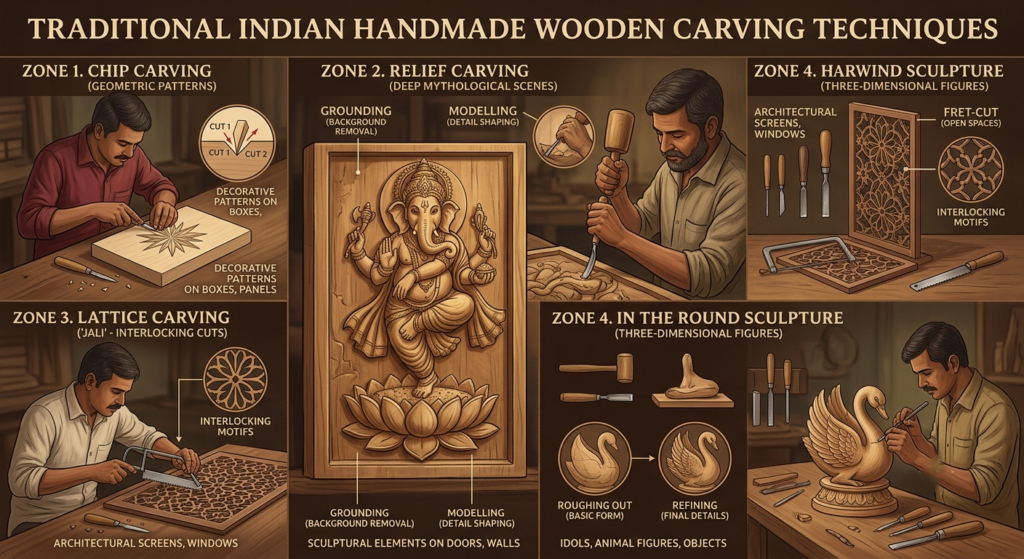
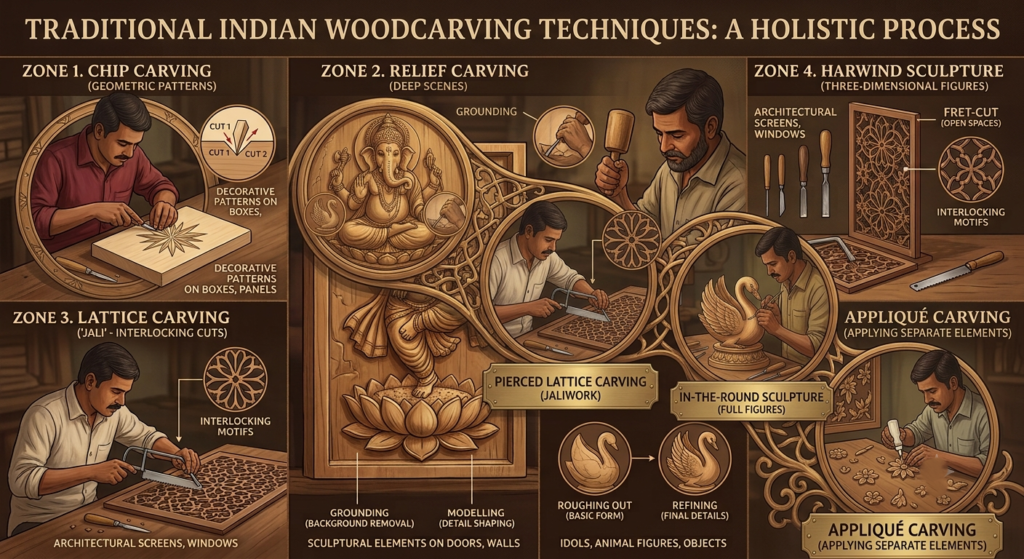
Relief carving is one of the most popular woodworking techniques. In this method, the design remains raised above the background surface.
Artisans commonly use this technique to create:
- Floral patterns
- Religious symbols
- Decorative wall panels
- Furniture designs
Relief carving requires excellent attention to detail and a great deal of patience.
2. Chip Carving
Chip carving involves removing small pieces of wood to create geometric patterns and decorative textures.
This technique is often used for:
- Picture frames
- Decorative boxes
- Tabletops
- Wooden signs
The precision required makes chip carving one of the most challenging forms of wood carving.
3. Whittling
Whittling is a simple yet highly creative carving technique in which artisans shape wood using a carving knife.
This technique is commonly used to create:
- Animal figures
- Toys
- Decorative objects
- Small sculptures
Whittling is often recommended for beginners because it requires only a few tools.
4. Sculptural Carving
Sculptural carving allows artisans to create three-dimensional designs from a solid block of wood.
Common examples include:
- Human figures
- Religious statues
- Animal sculptures
- Decorative ornaments
This technique requires advanced skills and extensive experience.
5. Letter Carving
Letter carving is used to engrave names, messages, and artistic lettering onto wooden surfaces.
It is commonly found in:
- Nameplates
- Decorative signs
- Memorial plaques
- Customized gifts
Artisans combine precision and creativity to produce elegant lettering styles.
Traditional Indian Wood Carving Techniques
Indian wood carving has a rich history, and each region has developed its own distinctive style.
Saharanpur Style
Saharanpur is famous for its detailed floral patterns and handcrafted furniture. Skilled artisans often work with sheesham wood because of its durability and attractive grain patterns.
Rajasthan Style
Rajasthani carvings feature bold geometric patterns and elaborate designs inspired by royal architecture.
Kashmir Walnut Carving
Kashmiri craftsmen are known for producing elegant walnut wood carvings that feature flowers, leaves, and intricate decorative elements.
Gujarat Style
Gujarati wood carving combines traditional craftsmanship with vibrant cultural influences.
Best Types of Wood for Handmade Carvings
Selecting the right type of wood is essential for achieving excellent results.
Teak Wood
Teak is highly durable and resistant to moisture, making it ideal for furniture and decorative items.
Sheesham Wood
Sheesham wood is widely used because of its strength, beautiful texture, and long-lasting quality.
Walnut Wood
Walnut wood is valued for its rich color and smooth surface.
Mango Wood
Mango wood is affordable, lightweight, and environmentally friendly.
Common Mistakes Beginners Should Avoid
Many new woodworkers encounter challenges during the learning process. Avoiding these mistakes can improve the quality of your work.
- Using the wrong type of wood
- Applying excessive force
- Neglecting tool maintenance
- Skipping the sanding process
- Working without a clear design plan
Developing patience and practicing regularly are essential for mastering wood carving.
How to Maintain Handmade Wooden Carvings
Proper maintenance helps preserve the beauty and durability of wooden artwork.
Follow these simple care tips:
- Remove dust regularly using a soft cloth.
- Keep the carving away from direct sunlight.
- Protect the surface from excessive humidity.
- Use natural wood polish occasionally.
- Handle delicate carvings carefully.
These steps will help maintain the appearance and quality of your handcrafted pieces for many years.
Frequently Asked Questions
What is the easiest wood carving technique for beginners?
Whittling is considered one of the easiest techniques because it requires minimal equipment and simple cutting methods.
Which wood is best for carving?
Teak wood, sheesham wood, walnut wood, and mango wood are among the most popular choices.
How long does handmade wood carving take?
The time depends on the complexity of the design. Simple carvings may take a few hours, while intricate projects can take several weeks.
Are handmade wooden carvings valuable?
Yes. Their value depends on the quality of craftsmanship, the type of wood used, and the uniqueness of the design.
Conclusion
Handmade wooden carving techniques continue to preserve centuries of artistic tradition while inspiring modern craftsmanship. Whether it is relief carving, whittling, chip carving, sculptural carving, or letter carving, every technique requires patience, skill, and creativity.
These timeless techniques allow artisans to create beautiful pieces that combine tradition, elegance, and functionality. As handmade craftsmanship becomes increasingly valued around the world, wooden carving remains a symbol of artistic excellence and cultural heritage.