Choosing the perfect dining table is about more than finding a beautiful piece of furniture. The right dining table should fit your room, accommodate your family, complement your interior style, and provide comfortable space for everyday meals and special occasions. Whether you are furnishing a compact apartment, a modern family home, or a luxurious dining room, choosing the correct size, shape, material, and design can make a major difference.
In this complete dining table buying guide, you will learn how to choose the perfect dining table for your home, including practical tips for size, shape, seating, material, comfort, durability, maintenance, and style.
What Is the Best Dining Table for Your Home?
The best dining table is one that fits your available space, meets your seating requirements, matches your home’s design, and suits your lifestyle. Before buying, consider four important factors: room size, seating capacity, table shape, and material.
For example, a round dining table can work well in a smaller dining area, while a rectangular wooden dining table may be better for a larger family or spacious dining room.
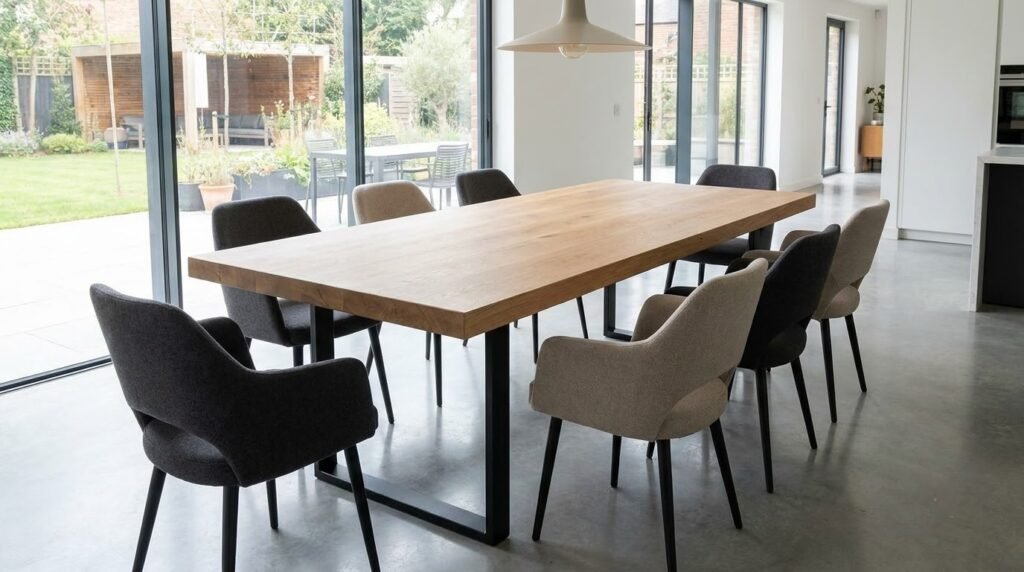
1. Measure Your Dining Space First
Before choosing a dining table, measure the available space carefully. A table that looks perfect in a furniture showroom may feel too large once placed inside your home.
Measure:
- Length and width of the dining area
- Distance from walls
- Space required for dining chairs
- Doorways and walking paths
- Nearby furniture and cabinets
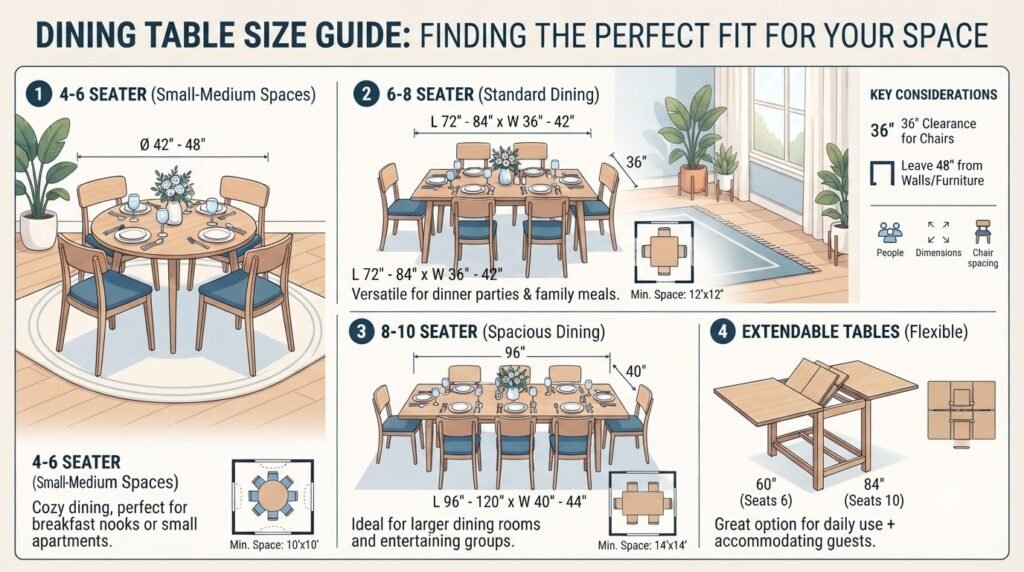
Leave enough clearance around the table so people can comfortably pull out chairs and walk behind seated guests.
Pro tip: Mark the approximate table dimensions on your floor using removable tape. This gives you a better idea of how much space the table will actually occupy.
2. Choose the Right Dining Table Size
Dining table size should depend on the number of people you regularly seat and the amount of space available.
Common options include:
- 2-seater: Ideal for couples or very compact spaces
- 4-seater: Suitable for small families and apartments
- 6-seater: A versatile option for many family homes
- 8-seater: Suitable for larger families and entertaining guests
- 10+ seater: Best for large dining rooms and frequent gatherings
Do not choose a table based only on the number of chairs. Consider the amount of elbow room and serving space required for comfortable meals.
A slightly larger table can be useful if you regularly host guests, but it should never make the room difficult to move around.
. dining table size guide
3. Select the Best Dining Table Shape
The shape of your dining table affects both appearance and functionality.
Rectangular Dining Table
Rectangular tables are among the most versatile choices. They work especially well in longer dining rooms and can provide seating for larger families.
A rectangular wooden dining table can also create a classic and sophisticated appearance.
Round Dining Table
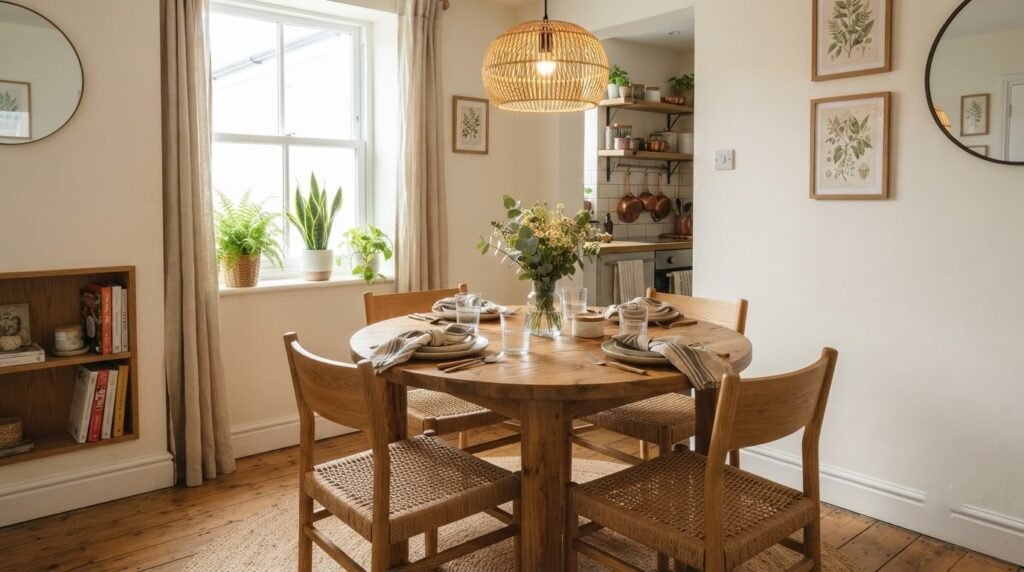
Round tables are excellent for creating an intimate dining environment. Everyone can face one another easily, making conversation more natural.
They can also work well in compact rooms because they do not have sharp corners.
Square Dining Table
A square dining table is suitable for square-shaped dining rooms and smaller households. It creates a balanced and symmetrical appearance.
Oval Dining Table
Oval tables combine some advantages of rectangular and round tables. They offer generous seating while having softer edges than a rectangular design.
Quick tip: Choose the table shape that complements both your room’s architecture and your normal seating requirements.
4. Choose the Right Dining Table Material
Material plays an important role in appearance, durability, maintenance, and price.
Solid Wood
Solid wood is a popular choice for people who want a warm, natural, and durable dining table. Different wood species provide different colors, grain patterns, hardness, and finishes.
Popular choices include:
- Sheesham wood
- Teak wood
- Oak
- Walnut
- Mango wood
- Acacia wood
Engineered Wood
Engineered wood can provide a consistent appearance and may be more affordable than some solid-wood options. Quality can vary, so construction and finish should be checked carefully.
Glass
Glass dining tables can create a visually lighter appearance and work well in contemporary interiors. However, they require regular cleaning to keep fingerprints and marks under control.
Metal
Metal tables can suit industrial or modern interiors. They are often combined with wood or glass for a mixed-material design.
When choosing a material, consider your lifestyle, cleaning habits, budget, and desired aesthetic.
5. Consider Your Home’s Interior Style
Your dining table should look like a natural part of your home’s overall design.
For a modern home, consider clean lines, simple silhouettes, and understated finishes.
For a luxury interior, a beautifully finished solid-wood table with detailed craftsmanship can become a focal point.
For a rustic home, natural wood grain and handcrafted details can add warmth.
For a traditional Indian-inspired interior, handcrafted wooden furniture, rich wood tones, and carved details can complement the overall atmosphere.
For a minimalist home, choose a simple table without excessive decorative elements.
The goal is to create visual harmony rather than choosing a table simply because it looks attractive by itself.
6. Check Dining Table Height and Comfort
Comfort is one of the most important factors when buying a dining table.
A table should provide sufficient legroom and work comfortably with your dining chairs. Do not consider the table and chairs as completely separate purchases.
Check:
- Table height
- Chair seat height
- Legroom
- Armrest clearance
- Distance between chair positions
- Tabletop thickness
Sit at the table before purchasing whenever possible. Your knees should have adequate space underneath, and your arms should rest comfortably while eating.
A beautiful dining table is not a good choice if it makes everyday meals uncomfortable.
7. Choose the Right Seating Capacity
Think about how many people actually use your dining table every day.
A family of four may choose a 4-seater table, but a 6-seater can provide additional flexibility when friends or relatives visit.
Before deciding, ask yourself:
How many people normally eat together?
How often do I host guests?
Do I need additional space for serving dishes?
Will my family grow in the future?
If you entertain frequently, an extendable dining table can be an excellent solution.
8. Choose a Dining Table for a Small Home
Small homes require careful furniture selection. An oversized dining table can make an otherwise comfortable room feel crowded.
For a compact space, consider:
- Round dining tables
- Compact rectangular tables
- Extendable designs
- Slim table legs
- Benches
- Multifunctional tables
A round table can help create better movement around corners, while an extendable design allows you to increase seating capacity when needed.
Avoid choosing a large table simply because you like its design. Available floor space should always come first.
9. Look for High-Quality Construction
A dining table should be stable enough for everyday use.
When inspecting a table, check:
- Tabletop stability
- Leg strength
- Joints
- Surface finish
- Wood quality
- Hardware
- Overall balance
- Craftsmanship
For wooden dining tables, examine the grain, edges, joints, and finish closely.
A quality dining table should feel stable rather than shaky when gently tested.
If you are buying handcrafted wooden furniture, ask about the wood species, construction method, finish, and care requirements.
10. Choose the Right Wood for Your Dining Table
The best wood for a dining table depends on your budget, desired appearance, availability, and durability requirements.
Sheesham Wood
Sheesham is widely appreciated for its distinctive grain and warm appearance. It is a popular material for Indian wooden furniture.
Teak Wood
Teak is known for durability and its attractive natural characteristics. It is often considered a premium furniture material.
Oak
Oak offers a recognizable grain pattern and works well with both traditional and contemporary designs.
Walnut
Walnut is valued for its deeper color and elegant appearance, making it popular for premium furniture.
Mango Wood
Mango wood can offer an attractive natural appearance and is commonly used in handcrafted furniture.
There is no single “best wood” for every home. Choose according to the table’s intended use, construction quality, finish, and your budget.
11. Match the Dining Table With Your Chairs
Dining chairs should complement the table without making the dining area look overcrowded.
You can choose:
- Matching dining chairs
- Upholstered chairs
- Wooden chairs
- Modern chairs
- Benches
- Mixed seating
Make sure the chairs fit comfortably underneath the table when not in use.
If you choose chairs with armrests, check that they can slide underneath the tabletop if that is important for your room layout.
12. Think About Maintenance Before Buying
Different materials require different levels of care.
Wooden dining tables should generally be protected from excessive moisture, prolonged direct sunlight, and unnecessary heat exposure. Use suitable cleaning methods recommended for the specific finish.
Simple habits can help maintain your dining table:
- Wipe spills promptly.
- Use appropriate placemats and coasters.
- Avoid placing extremely hot objects directly on the surface.
- Follow the manufacturer’s cleaning instructions.
- Periodically inspect joints and hardware.
- Keep the table away from conditions that may damage its finish.
Proper care can help maintain the table’s appearance and functionality for years.
13. Set a Realistic Dining Table Budget
Dining table prices can vary significantly depending on material, size, craftsmanship, construction, design, and finish.
Instead of choosing the cheapest option, consider the overall value.
A good-quality dining table may cost more initially but can offer better construction and durability.
Before purchasing, compare:
- Material quality
- Construction
- Finish
- Size
- Craftsmanship
- Warranty or service
- Maintenance requirements
If you are buying a custom wooden dining table, ask about wood type, dimensions, finish, delivery, and customization options.
14. Avoid Common Dining Table Buying Mistakes
Many buyers make the mistake of focusing only on appearance.
Avoid these common problems:
Buying a Table That Is Too Large
Always measure your room before ordering.
Ignoring Chair Clearance
A table may technically fit the room but still be uncomfortable if chairs cannot move freely.
Choosing Style Over Comfort
A stylish table is not useful if everyday dining feels uncomfortable.
Ignoring Material Quality
Two tables may look similar but have very different construction quality.
Forgetting Future Needs
Think about guests, family changes, and how you expect to use the dining area.
Not Considering Maintenance
Some finishes require more cleaning and care than others.
15. Think About Your Long-Term Lifestyle
The perfect dining table should fit your lifestyle, not just your current room design.
If you work from home occasionally at the dining table, you may want a sturdy and comfortable surface.
If you regularly host family gatherings, choose a larger or extendable design.
If your home has limited space, prioritize compact and multifunctional furniture.
If you love traditional craftsmanship, a handcrafted wooden dining table may provide the warmth and character you want.
Think about how the table will be used five or ten years from now, not only how it looks today.
Dining Table Size Guide: Quick Reference
| Seating | Best For | Recommended Table Type |
|---|---|---|
| 2 people | Couples/small spaces | Round or compact square |
| 4 people | Small families | Round, square or rectangular |
| 6 people | Average family | Rectangular or oval |
| 8 people | Large family | Rectangular or oval |
| 10+ people | Large gatherings | Large rectangular or extendable |
These are general guidelines. Actual comfort depends on the table dimensions, chair size, room layout, and the amount of space required around the furniture.
How Much Space Should You Leave Around a Dining Table?
Adequate clearance is essential for comfortable movement.
As a practical planning guideline, allow enough room around the table for chairs to be pulled out and for people to walk behind seated diners.
Before buying, consider the complete footprint:
Table + chairs + movement space = required dining area
This is more useful than measuring the tabletop alone.
Why Wooden Dining Tables Remain Popular
Wooden dining tables remain popular because they can add warmth, texture, and a natural character to an interior.
A well-designed wooden dining table can work with:
- Modern interiors
- Traditional interiors
- Rustic homes
- Contemporary spaces
- Luxury interiors
- Indian-inspired decor
The natural grain of wood also means that every table can have its own visual character.
For buyers interested in long-term furniture, focus on quality wood, strong construction, appropriate finishing, and good maintenance rather than simply choosing a table based on appearance.
Frequently Asked Questions About Choosing a Dining Table
What is the best dining table shape for a small room?
Round and compact tables can work well in smaller rooms because their shape can make movement around the table easier. However, the best choice ultimately depends on the room’s dimensions and layout.
What size dining table is best for a family of four?
A 4-seater table can comfortably suit a family of four, while a 6-seater may provide additional flexibility for guests if the room has enough space.
Is solid wood good for a dining table?
Yes, quality solid wood can be an excellent choice because of its natural appearance and durability. However, construction quality, wood species, finish, and maintenance also matter.
Which wood is best for a dining table?
There is no universal best wood. Sheesham, teak, oak, walnut, mango, and acacia can all be suitable depending on the desired appearance, durability, availability, and budget.
Should I choose a round or rectangular dining table?
Choose based on your room shape, available floor space, seating requirements, and preferred design. Rectangular tables are versatile for larger groups, while round tables can work particularly well in compact or social dining spaces.
How do I choose the perfect dining table?
Start by measuring your dining area, determine your seating requirements, choose an appropriate shape, select a suitable material, check comfort and construction quality, and make sure the style complements your home.
Final Thoughts
Choosing the perfect dining table for your home requires a balance between size, style, comfort, functionality, material, quality, and budget. Start by measuring your available space and determining how many people you need to seat. Then choose a table shape and material that suit your room and lifestyle.
For homeowners looking for warmth and timeless appeal, a quality wooden dining table can be an excellent option. Whether you prefer a modern, minimalist, rustic, traditional, or luxury design, the most important thing is to select a table that feels comfortable and works naturally within your space.
Remember: the perfect dining table is not necessarily the biggest, most expensive, or most fashionable one. It is the one that fits your home, your family, and the way you actually live.
Conclusion
The perfect dining table is not simply the most beautiful one—it is the table that fits your space, seating needs, lifestyle, interior design and budget. Measure your room first, choose the right size and shape, check material quality, and prioritize comfort and durability before making your final decision.