Introduction: The Timeless Beauty of Wooden Carving
Wooden carving is one of the oldest and most fascinating forms of human creativity. For thousands of years, skilled artisans have transformed simple pieces of wood into beautiful sculptures, furniture, architectural designs, and decorative artworks. The history of wooden carving reflects human imagination, cultural traditions, religious beliefs, and craftsmanship passed from one generation to another.
From ancient temples and royal palaces to modern luxury homes, wood carving has maintained its importance as a symbol of elegance and artistic expression. Even today, handmade wooden carvings are highly valued because they represent uniqueness, patience, and traditional skills that machines cannot fully replace.
In this article, we will explore the ancient art of wooden carving, its hidden stories, historical journey, traditional techniques, cultural importance, and evolution into modern wood craft.
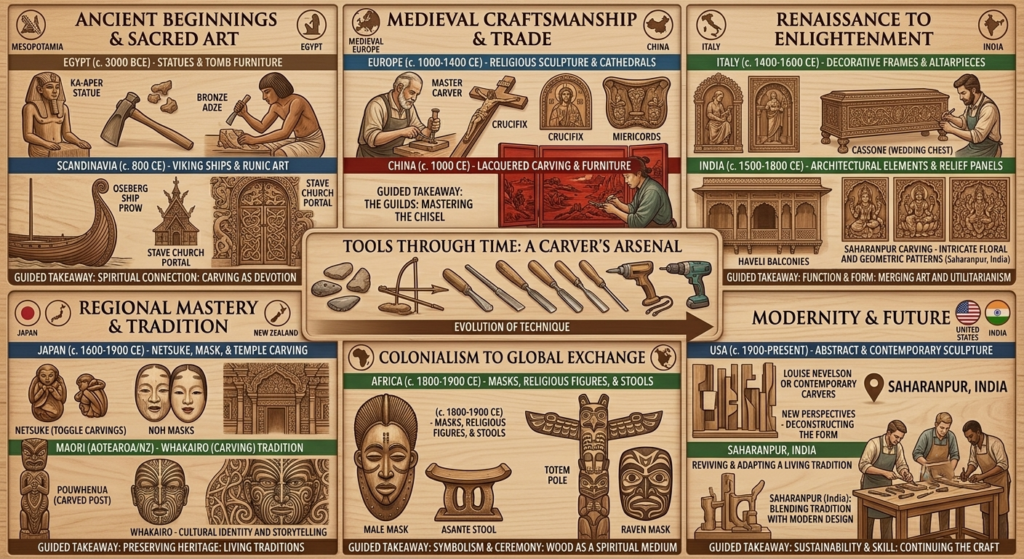
What Is Wooden Carving?
Wooden carving is the process of shaping and decorating wood by removing small pieces using specialized tools such as chisels, knives, and carving blades. Artists create detailed patterns, sculptures, furniture designs, and decorative elements by carefully cutting and shaping natural wood.
Wood carving is used for creating:
- Wooden sculptures
- Decorative wall panels
- Traditional furniture
- Temple and palace decorations
- Doors and windows
- Handmade handicrafts
- Luxury home décor items
Unlike mass-produced furniture, carved wooden products showcase the personal touch and creativity of skilled craftsmen.
The Ancient Origins of Wooden Carving
The history of wooden carving dates back thousands of years. Early humans used wood not only for tools and daily objects but also for artistic and spiritual purposes.
Wooden Carving in Ancient Egypt
Ancient Egypt is one of the earliest civilizations known for advanced wood craftsmanship. Egyptian artisans created:
- Wooden statues
- Religious figures
- Decorative furniture
- Storage boxes
- Royal objects
Many wooden artworks were created for temples and royal families. Craftsmen used detailed carving techniques to represent gods, animals, and important cultural symbols.
Wooden Carving in Ancient Greece and Rome
Ancient Greek and Roman civilizations also contributed greatly to the development of wood carving.
Wood was used for:
- Furniture decoration
- Architectural details
- Religious objects
- Artistic designs
Although many ancient wooden artworks were lost over time, historical records show that skilled craftsmen created highly detailed wooden pieces.
The Rich Tradition of Wooden Carving in India
India has a deep and diverse history of wooden carving that is connected with architecture, spirituality, and traditional craftsmanship. Indian artisans have been practicing wood carving for centuries, creating extraordinary designs that represent cultural heritage.
Wood carving in India can be seen in:
- Ancient temples
- Royal palaces
- Traditional homes
- Wooden furniture
- Decorative doors
- Religious structures
Indian wood carving is famous because of its detailed patterns, floral designs, and storytelling through artwork.
Famous Indian Wooden Carving Styles
1. Kashmiri Wood Carving
Kashmir is famous for its beautiful walnut wood carving. Artisans create detailed floral and natural patterns on:
- Furniture
- Decorative boxes
- Wall panels
- Handcrafted products
Kashmiri carving is known for its precision and elegant designs.
2. Rajasthan Wooden Carving
Rajasthan has a rich tradition of royal wooden craftsmanship. Carved wooden furniture from Rajasthan often includes:
- Traditional patterns
- Royal designs
- Artistic details
These designs reflect the cultural heritage of Indian kings and palaces.
3. Gujarat Wood Carving
Gujarat is known for beautifully carved wooden houses, doors, and architectural elements. Traditional Gujarati woodwork features:
- Geometric patterns
- Floral motifs
- Detailed craftsmanship
4. South Indian Wood Carving
South Indian artisans are known for temple wood carving and religious artwork. These carvings often include:
- Mythological stories
- Gods and goddesses
- Traditional symbols
Evolution of Wooden Carving Through History
Wood carving has continuously evolved with changing cultures, technology, and design trends.
Ancient Period
During ancient times, wood carving was mainly connected with:
- Religion
- Spiritual practices
- Royal traditions
- Cultural storytelling
Craftsmen used simple hand tools to create detailed artwork.
Medieval Period
During the medieval era, wooden carving became an important part of palace architecture and luxury furniture.
Artisans created:
- Decorative furniture
- Large wooden doors
- Architectural carvings
- Artistic panels
Industrial Revolution
The industrial revolution introduced machines that changed furniture production. While machines improved speed, handmade wood carving remained valuable because of its artistic quality.
Modern Era
Today, wooden carving combines traditional craftsmanship with modern design concepts.
Modern applications include:
- Luxury furniture
- Interior decoration
- Custom wooden designs
- Modern wall art
- Designer home décor
Traditional Wooden Carving Techniques
1. Relief Carving
Relief carving involves creating raised designs on a flat wooden surface. This technique is commonly used for:
- Wall panels
- Doors
- Decorative furniture
2. Chip Carving
Chip carving creates patterns by removing small pieces of wood. It is often used for geometric and decorative designs.
3. Deep Carving
Deep carving creates three-dimensional designs with greater depth and detail.
Common examples:
- Wooden sculptures
- Artistic furniture
- Decorative artwork
4. Whittling
Whittling is a simple carving method where craftsmen use knives to shape small wooden objects.
Traditional Tools Used in Wooden Carving
Wood carving requires skill and specialized tools, including:
- Carving knives
- Chisels
- Gouges
- Wooden mallets
- Cutting blades
- Sandpaper tools
Experienced craftsmen use these tools to create precise patterns and smooth finishes.
Hidden Stories Behind Wooden Carving Art
Every carved wooden piece has a story behind it. Traditional carvings often represent:
- Cultural beliefs
- Historical events
- Nature
- Religious stories
- Community traditions
A carved wooden door may represent protection and prosperity, while a wooden sculpture may represent mythology or spiritual beliefs.
This storytelling quality makes wooden carving more than just decoration—it becomes a connection between history and art.
Importance of Wooden Carving in Modern Interior Design
Today, wooden carving is becoming popular in luxury interior design because it adds warmth and character to spaces.
Modern uses include:
Carved Wooden Wall Panels
Create elegant feature walls with artistic patterns.
Luxury Wooden Furniture
Carved sofas, chairs, tables, and cabinets add a premium appearance.
Decorative Doors
Traditional carved doors create a grand entrance.
Handmade Wooden Décor
Small carved products add artistic beauty to homes.
Best Woods Used for Carving
Teak Wood
- Strong and durable
- Premium appearance
- Suitable for furniture
Walnut Wood
- Beautiful natural patterns
- Popular for detailed carving
Oak Wood
- Strong structure
- Classic look
Mango Wood
- Sustainable and affordable
Cedar Wood
- Soft and easy to carve
Future of Wooden Carving Art
The future of wooden carving combines traditional skills with modern creativity.
Future trends include:
- Sustainable wood craftsmanship
- Custom-made furniture
- Modern carved wall designs
- Handmade luxury décor
- Digital design combined with traditional carving
As people look for unique and environmentally friendly products, handmade wooden crafts continue to gain popularity worldwide.
Frequently Asked Questions (AEO)
Q1. How old is wooden carving art?
Wood carving is thousands of years old and has been practiced since ancient civilizations such as Egypt, India, Greece, and China.
Q2. Why is wooden carving important?
Wood carving preserves cultural heritage, supports artisans, and represents traditional craftsmanship.
Q3. Which wood is best for carving?
Walnut, teak, oak, cedar, and mango wood are commonly used for carving because of their quality and workability.
Q4. Is wooden carving still popular today?
Yes, wooden carving remains popular in luxury furniture, home décor, architecture, and handmade crafts.
Q5. What are the main wooden carving techniques?
Relief carving, chip carving, deep carving, and whittling are some of the most popular techniques.
Conclusion: The Endless Journey of Wooden Carving
The history of wooden carving is a journey of creativity, tradition, and human imagination. From ancient civilizations to modern luxury interiors, wood carving has remained a timeless art form that connects people with nature and culture.
Each carved wooden creation carries the dedication of skilled artisans and tells a unique story. Whether used in furniture, architecture, or home décor, wooden carving continues to inspire people around the world.
As modern designs continue to evolve, this ancient craft will remain a symbol of beauty, heritage, and timeless craftsmanship for generations to come.