Introduction
Choosing the right material for furniture is one of the most important decisions when designing a home. Furniture is not only about beauty and style; it is also about durability, maintenance, comfort, and long-term value. Today, two of the most popular choices in the furniture industry are solid wood and engineered wood.
Many homeowners get confused between these two options. Should you invest in premium solid wood furniture, or is engineered wood a smarter and more affordable choice? The answer depends on your budget, lifestyle, design preferences, and how long you want your furniture to last.
In this complete guide, we will compare Solid Wood vs Engineered Wood based on durability, appearance, cost, maintenance, advantages, disadvantages, and the best uses for each material.
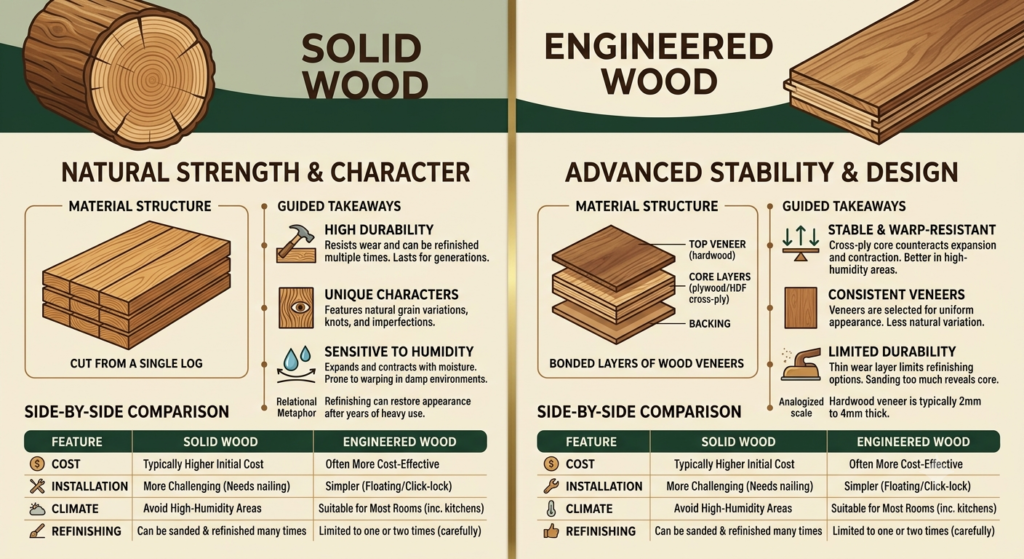
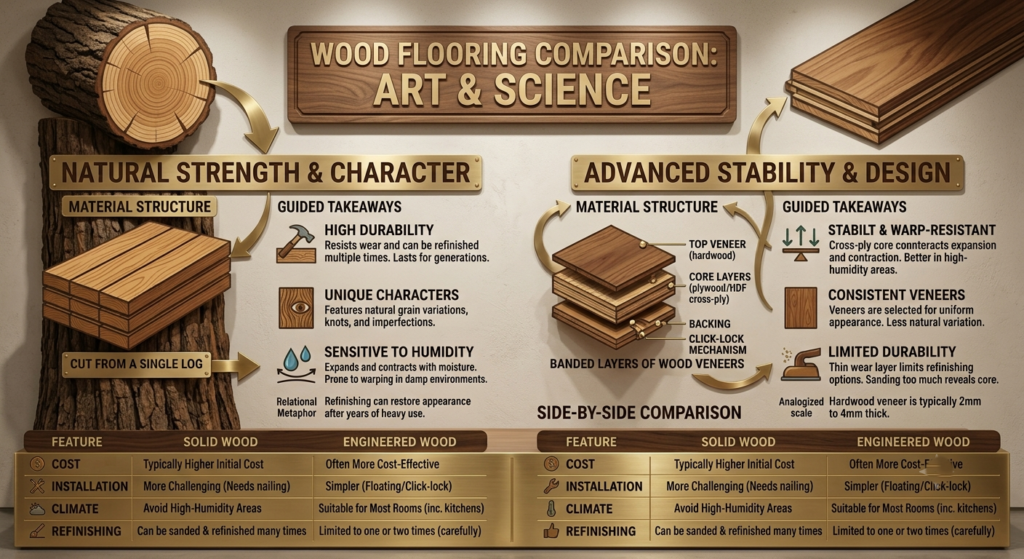
What Is Solid Wood?
Solid wood is a natural wood material that comes directly from trees. Furniture made from solid wood uses natural timber without combining it with artificial materials.
Popular types of solid wood used for furniture include:
- Teak Wood
- Sheesham Wood (Indian Rosewood)
- Oak Wood
- Walnut Wood
- Mango Wood
- Pine Wood
Solid wood furniture has been used for centuries because of its strength, natural beauty, and ability to last for generations.
Features of Solid Wood:
- Made from 100% natural timber
- Unique wood grain patterns
- Strong and heavy structure
- Can be polished and repaired multiple times
- Provides a premium and luxurious appearance
What Is Engineered Wood?
Engineered wood is a manufactured wood product created by combining wood fibers, particles, veneers, or layers using adhesives and advanced technology.
Unlike solid wood, engineered wood is designed to improve affordability, stability, and flexibility.
Common types of engineered wood include:
1. MDF (Medium Density Fiberboard)
Made from compressed wood fibers and resin. It provides a smooth surface and is commonly used in modern furniture.
2. Plywood
Made by joining multiple layers of thin wood veneers. It offers good strength and resistance.
3. Particle Board
Made from compressed wood particles. It is one of the most affordable furniture materials.
4. HDF (High Density Fiberboard)
A stronger version of MDF used for premium interior applications.
Solid Wood vs Engineered Wood: Quick Comparison
| Feature | Solid Wood | Engineered Wood |
|---|---|---|
| Material | Natural timber | Manufactured wood |
| Durability | Very High | Medium to High |
| Lifespan | 20–100+ years | 5–20 years |
| Appearance | Natural grain | Artificial finish |
| Strength | Extremely strong | Depends on quality |
| Cost | Expensive | Affordable |
| Maintenance | Easy | Moderate |
| Repair | Can be repaired easily | Limited repair options |
| Weight | Heavy | Lightweight |
| Design Flexibility | Limited | More design options |
Durability: Which One Lasts Longer?
When it comes to durability, solid wood is the clear winner.
High-quality solid wood furniture can last for decades or even generations with proper care. Materials like teak and sheesham wood are naturally strong and resistant to daily wear.
For example:
- Solid wood dining tables can last 50+ years
- Wooden beds can remain strong for decades
- Cabinets made from solid wood can be restored and reused
Engineered wood can also provide good durability, especially plywood and high-quality MDF. However, it generally does not match the lifespan of premium solid wood.
Winner: Solid Wood
Appearance and Design Comparison
Solid Wood Appearance
One of the biggest advantages of solid wood is its natural beauty.
Every piece of solid wood furniture has a unique:
- Grain pattern
- Texture
- Color variation
- Natural character
This gives homes a warm, elegant, and timeless look.
Engineered Wood Appearance
Engineered wood offers a modern appearance with:
- Smooth finishes
- Multiple colors
- Laminate options
- Contemporary designs
It is widely used in modular kitchens, wardrobes, and modern interiors.
Winner:
- Luxury and natural beauty → Solid Wood
- Modern designs → Engineered Wood
Cost Comparison: Solid Wood vs Engineered Wood
Solid Wood Cost
Solid wood furniture requires a higher investment because:
- Natural timber is expensive
- Manufacturing requires skilled craftsmanship
- The material is stronger and longer-lasting
However, it offers better long-term value because you may not need replacement for many years.
Engineered Wood Cost
Engineered wood is budget-friendly because:
- It uses processed wood materials
- Manufacturing is faster
- It is easily available
It is a practical choice for people who want stylish furniture at an affordable price.
Winner:
- Budget-friendly option → Engineered Wood
- Long-term investment → Solid Wood
Maintenance Requirements
Solid Wood Maintenance
Solid wood furniture requires basic care:
- Avoid excessive moisture
- Clean regularly with a soft cloth
- Polish occasionally
- Protect from extreme sunlight
The advantage is that scratches and damage can often be repaired.
Engineered Wood Maintenance
Engineered wood needs careful handling:
- Avoid water exposure
- Prevent surface damage
- Use proper cleaning products
Some engineered wood products cannot be repaired once damaged.
Winner: Solid Wood
Environmental Impact
The environmental impact depends on how the wood is sourced and manufactured.
Solid Wood
Advantages:
- Long lifespan reduces replacement waste
- Natural and biodegradable
- Can be restored
Disadvantage:
- Requires responsible forest management
Engineered Wood
Advantages:
- Uses wood leftovers and fibers
- Reduces waste from timber processing
Disadvantage:
- Often contains adhesives and synthetic materials
Both options can be sustainable when produced responsibly.
Best Furniture Choices for Solid Wood
Solid wood is ideal for:
1. Wooden Beds
Strong structure and long lifespan make solid wood perfect for bedroom furniture.
2. Dining Tables
A solid wood dining table creates a premium and elegant look.
3. Wooden Cabinets
Provides strength and timeless design.
4. Luxury Home Décor
Perfect for handcrafted and traditional furniture styles.
Best Furniture Choices for Engineered Wood
Engineered wood works well for:
1. Modular Kitchens
It provides modern designs and smooth finishes.
2. Wardrobes
Affordable and available in many styles.
3. Office Furniture
Lightweight and cost-effective.
4. Rental Homes
A good option where frequent furniture changes are needed.
Advantages and Disadvantages of Solid Wood
Advantages:
✔ Extremely durable
✔ Premium appearance
✔ Natural beauty
✔ Can be repaired
✔ Increases home value
✔ Long-lasting investment
Disadvantages:
✘ Higher price
✘ Heavy weight
✘ Requires skilled manufacturing
✘ Limited availability of some wood types
Advantages and Disadvantages of Engineered Wood
Advantages:
✔ Affordable price
✔ Modern designs
✔ Lightweight
✔ Easy availability
✔ Good for contemporary interiors
Disadvantages:
✘ Shorter lifespan compared to solid wood
✘ Limited repair options
✘ Quality varies by manufacturer
✘ May not handle moisture well
Which One Should You Choose in 2026?
The best choice depends on your requirements.
Choose Solid Wood If:
- You want premium furniture
- You prefer natural materials
- You want furniture that lasts decades
- You are making a long-term investment
- You love traditional wooden designs
Choose Engineered Wood If:
- You have a limited budget
- You want modern furniture designs
- You need lightweight furniture
- You are furnishing a rental property
- You want quick and affordable solutions
Final Verdict: Solid Wood vs Engineered Wood
Both materials have their own benefits. Solid wood is the best choice for people who value durability, luxury, and long-term investment. It offers unmatched strength and natural beauty.
Engineered wood is a practical choice for affordable, stylish, and modern furniture solutions.
If you are looking for furniture that can become a family heirloom, choose solid wood. If you want affordable furniture with contemporary designs, engineered wood is a smart option.
Frequently Asked Questions (FAQs)
Q1. Is solid wood better than engineered wood?
Yes, solid wood generally offers better durability, strength, and lifespan compared to engineered wood.
Q2. Which wood is best for furniture?
Teak, Sheesham, Oak, and Walnut are considered excellent choices for premium furniture.
Q3. Is engineered wood good for home furniture?
Yes, high-quality engineered wood is suitable for wardrobes, modular kitchens, and modern furniture.
Q4. Which lasts longer: solid wood or engineered wood?
Solid wood usually lasts much longer and can be restored multiple times.
Q5. Is solid wood furniture worth buying?
Yes, because it provides durability, timeless beauty, and better long-term value.